Tag: Sanjukta Dasgupta
Sanjukta Dasgupta
Showing all 2 results
-
 Add to cart
‘The myth of the weavers’ thumbs may also have grown out of the famous Mahabharata story of Ekalavya, a dark-skinned, low-caste boy whose skill at archery rivalled that of the noble heroes, the Pandavas; to maintain the Pandavas’ supremacy as archers, their teacher demanded that Ekalavya cut off his right thumb.’ ‘An interesting parallel between Ekalavya and Karna, an illegitimate child abandoned by his Kshatriya mother and brought up by a charioteer. Like Ekalavya, Karna finds that his lower caste disqualifies him from an archery contest with Arjuna, again under Drona’s aegis;…’ The poem ‘Ekalavya Speaks’ perhaps defines the purpose, perspectives, resilience and relevance of Ekalavya in our times. Many of the poems in this volume address the deep-rooted prevalence of systemic marginalization of citizens of our country, on the basis of caste, class, gender and religion, among others. Othering is the unifying theme in this volume of 100 poems, though some of the poems do not typically focus on issues of discrimination and ostracism.


Products
-
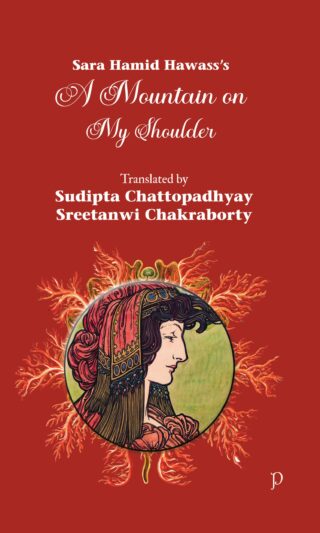 Sara Hamid Hawass ‘s A Mountain on My Shoulder Translated by Sudipta Chattopadhyay, and Sreetanwi Chakraborty
₹399.00
Sara Hamid Hawass ‘s A Mountain on My Shoulder Translated by Sudipta Chattopadhyay, and Sreetanwi Chakraborty
₹399.00
-
 The Moon I Knew by D. Vaishnavi
Original price was: ₹399.00.₹350.00Current price is: ₹350.00.
The Moon I Knew by D. Vaishnavi
Original price was: ₹399.00.₹350.00Current price is: ₹350.00.
-
 Mobin Mohan’s Jacaranda translated from Malayalam into English by Akhil Jose
₹399.00
Mobin Mohan’s Jacaranda translated from Malayalam into English by Akhil Jose
₹399.00
-
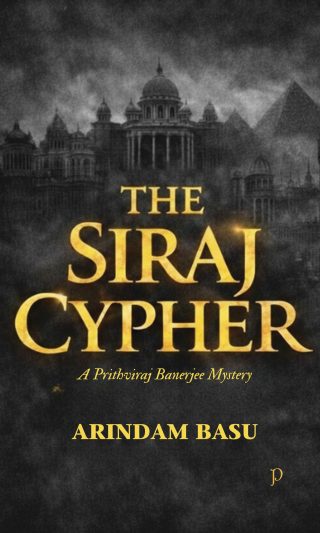 THE SIRAJ CYPHER by Arindam Basu
₹800.00
THE SIRAJ CYPHER by Arindam Basu
₹800.00
-
 Rongin Radhikapath by Sudipta Maji
₹225.00
Rongin Radhikapath by Sudipta Maji
₹225.00