Tag: Ajanta Paul
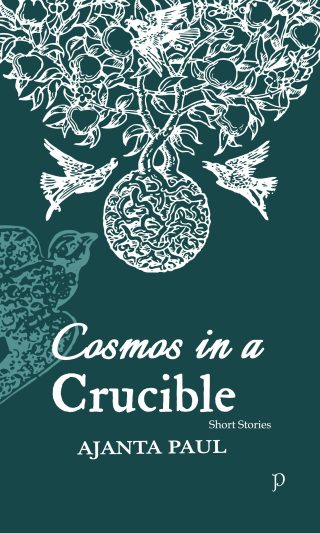
Ajanta Paul
Showing all 2 results
-

Earth Elegies by Ajanta Paul
₹250.00Add to cartAjanta Paul’s Earth Elegies celebrates the mystery and beauty of nature while decrying its despoliation. In their focus on environmental concerns, many poems are ecopoetic through and through. The collection also draws attention to subtle moments of appreciating nature as well as to our emotional responses to places. At the same time, ecological awareness threads through the collection. Such interconnections surface in the redolent line “of sap and sapience” from the poem “A Late Flowering.” Here the poet implies that sap is sapience. Some poems in Earth Elegies address non-human beings as communicative subjects. “Talismanic Tree,” for instance, foregrounds the felt encounters between people and plants. The speaker retreats into the “natural, capacious arms. / Our safe and loving anchorage!” To be certain, there is a lexicon for touch—hard, soft, rough, smooth, slick, tickling—but also the idea of being moved, affected, or impacted positively. As Margaret Atwood writes in no uncertain terms, ‘Touch comes before sight, before speech. It is the first language and the last, and it always tells the truth.” Ajanta Paul’s poetry engages touch in both senses: of skin-to-skin contact with trees but also of the encounters with the arboreal world that transform us profoundly…John Charles Ryan


Products
-
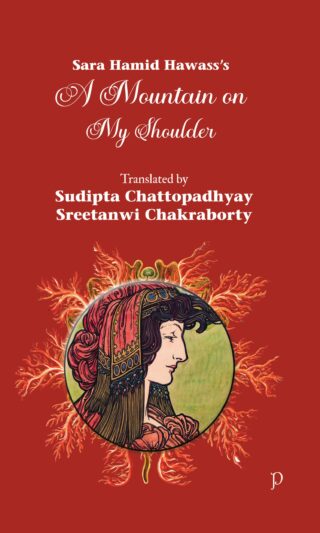 Sara Hamid Hawass ‘s A Mountain on My Shoulder Translated by Sudipta Chattopadhyay, and Sreetanwi Chakraborty
₹399.00
Sara Hamid Hawass ‘s A Mountain on My Shoulder Translated by Sudipta Chattopadhyay, and Sreetanwi Chakraborty
₹399.00
-
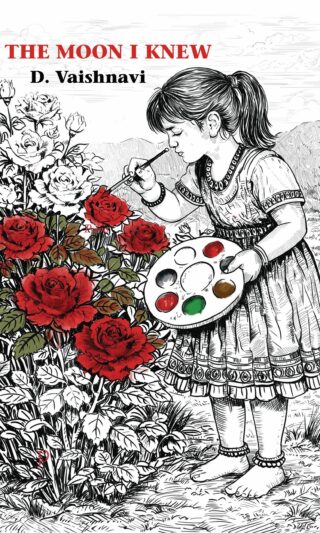 The Moon I Knew by D. Vaishnavi
Original price was: ₹399.00.₹350.00Current price is: ₹350.00.
The Moon I Knew by D. Vaishnavi
Original price was: ₹399.00.₹350.00Current price is: ₹350.00.
-
 Mobin Mohan’s Jacaranda translated from Malayalam into English by Akhil Jose
₹399.00
Mobin Mohan’s Jacaranda translated from Malayalam into English by Akhil Jose
₹399.00
-
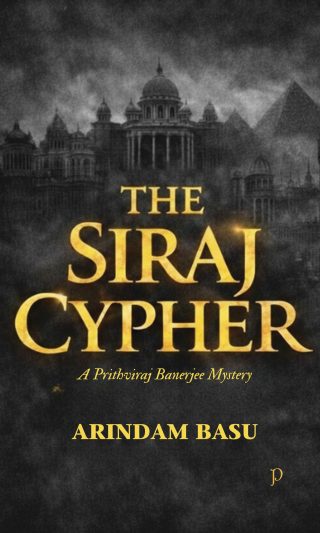 THE SIRAJ CYPHER by Arindam Basu
₹800.00
THE SIRAJ CYPHER by Arindam Basu
₹800.00
-
 Rongin Radhikapath by Sudipta Maji
₹225.00
Rongin Radhikapath by Sudipta Maji
₹225.00