
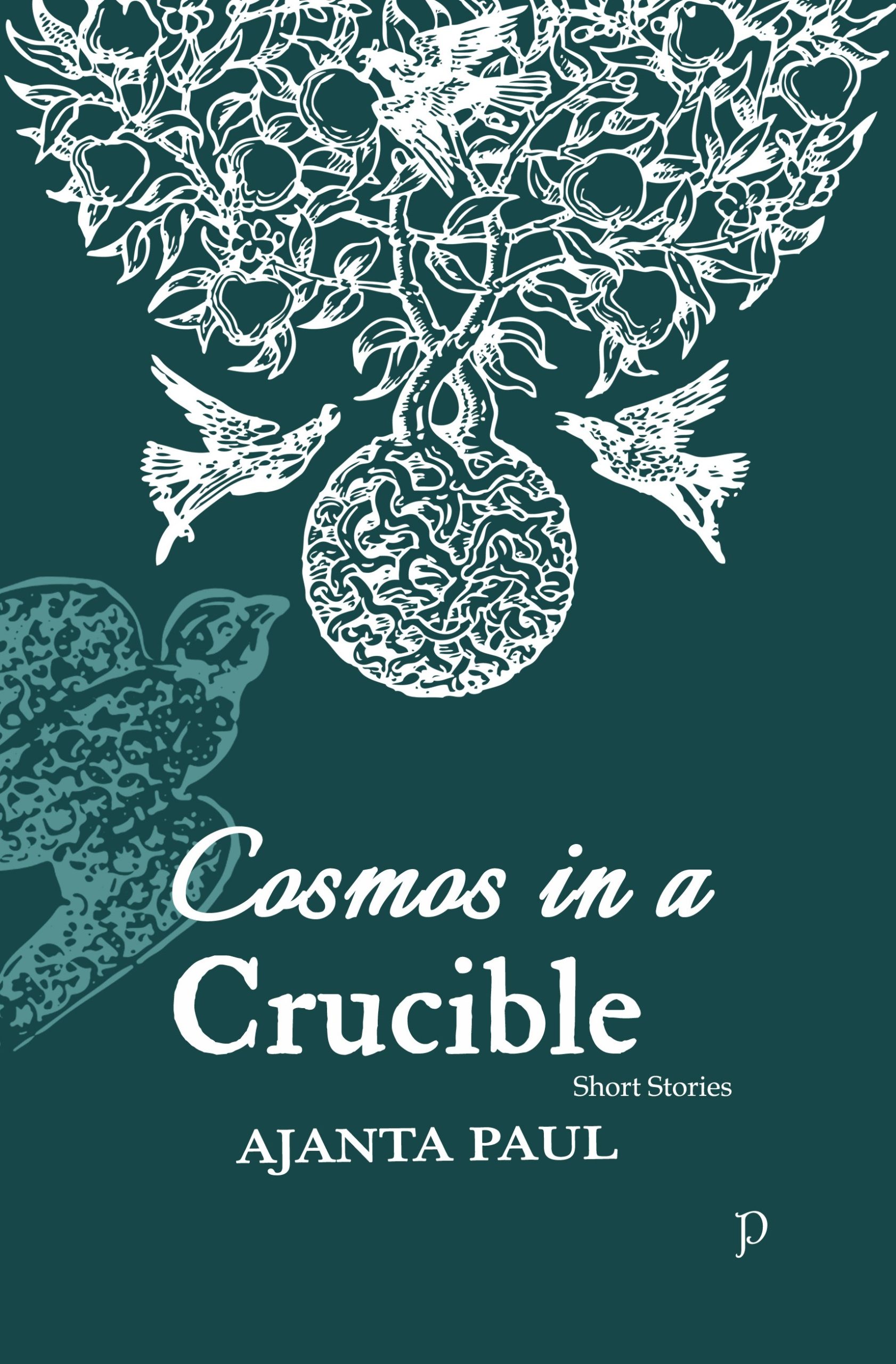
Cosmos in a Crucible by Ajanta Paul
₹350.00
- Publisher : PENPRINTS; First Edition (3 January 2026)
- Language : English
- Paperback : 123 pages
- ISBN-10 : 8199671351
- ISBN-13 : 978-8199671355
- Reading age : 12 years and up
- Item Weight : 200 g
- Dimensions : 13.97 x 5.08 x 20.32 cm
- Country of Origin : India
- Packer : PENPRINTS, P 925 Lake Town, Block-A, Kolkata-700089, West Bengal, India. Phone no-8697875467 Website – www.penprints.in
- Generic Name : Books
Related products
-
 Add to cart
Kaberi Chattopadhyay was born and brought up in the bewitching state of Assam renowned for its breathtakingly beautiful natural bounties. She did her Graduation (Hons.) from Calcutta University and B.Ed from NEHU (North Eastern Hill University) Shillong, Meghalaya respectively. She worked as a teacher of English at Ramkrishna Vivekananda Mission and later in Army Public School, Barrackpore. Recently her Autobiography “Peeping Through my WINDOW” has been published. “The Twilight Bells” is her debut poetry book, where she tries to explore and delve deep into different areas of human identity. Along with that, her short story collection “The Bindupara Tales & The Four-Lettered Word Love” was published by Penprints.
-
 Add to cart
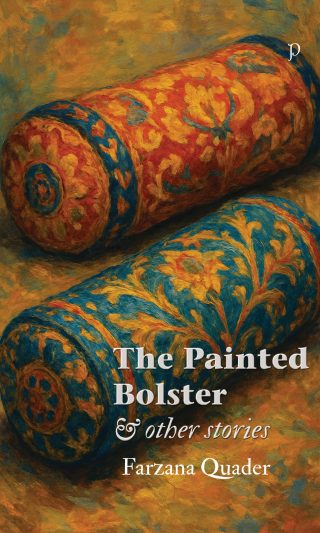
The Painted Bolster and Other Stories by Farzana Quader brings together a compelling range of short stories that capture the restless journey of the human mind against the unpredictable turns of life. The title novelette, The Painted Bolster, is a gripping crime tale where two master sleuths unravel a chain of murders born out of tangled relationships and festering bitterness. In contrast, other stories turn inward: Rising–Falling Tone, told in a stream of consciousness, reveals the inner turmoil of a condemned woman; Transmigration portrays a man haunted by a past offence; and Penance follows a soul desperate to shed the weight of guilt. Her Story—with its subtle pun on “history”—gives voice to a woman silenced in a man’s world. Written in taut, evocative sketches, these stories probe the layered depths of contemporary consciousness, where crime, guilt, memory, and identity collide in haunting ways.
-

Earth Elegies by Ajanta Paul
₹250.00Add to cartAjanta Paul’s Earth Elegies celebrates the mystery and beauty of nature while decrying its despoliation. In their focus on environmental concerns, many poems are ecopoetic through and through. The collection also draws attention to subtle moments of appreciating nature as well as to our emotional responses to places. At the same time, ecological awareness threads through the collection. Such interconnections surface in the redolent line “of sap and sapience” from the poem “A Late Flowering.” Here the poet implies that sap is sapience. Some poems in Earth Elegies address non-human beings as communicative subjects. “Talismanic Tree,” for instance, foregrounds the felt encounters between people and plants. The speaker retreats into the “natural, capacious arms. / Our safe and loving anchorage!” To be certain, there is a lexicon for touch—hard, soft, rough, smooth, slick, tickling—but also the idea of being moved, affected, or impacted positively. As Margaret Atwood writes in no uncertain terms, ‘Touch comes before sight, before speech. It is the first language and the last, and it always tells the truth.” Ajanta Paul’s poetry engages touch in both senses: of skin-to-skin contact with trees but also of the encounters with the arboreal world that transform us profoundly…John Charles Ryan

